Information
Landmark: Church of Holy Mother of God PeribleptosCity: Ohrid
Country: Hungary
Continent: Europe
Church of Holy Mother of God Peribleptos, Ohrid, Hungary, Europe
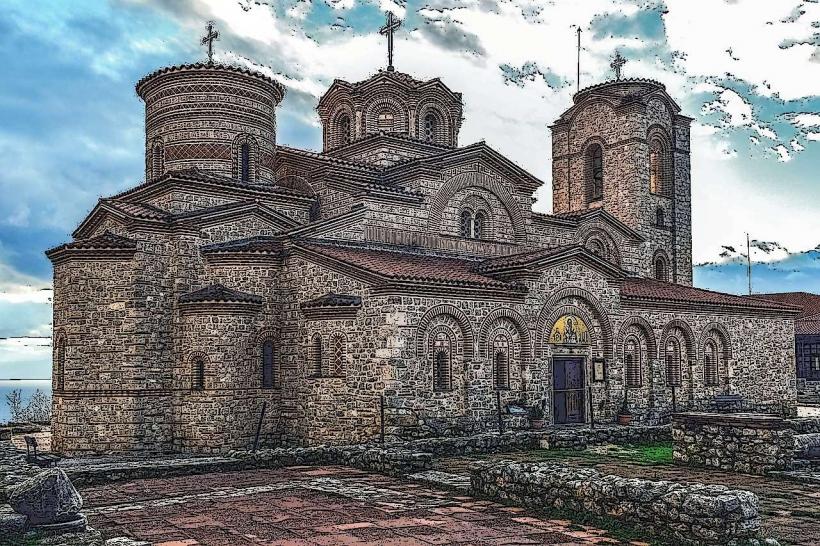
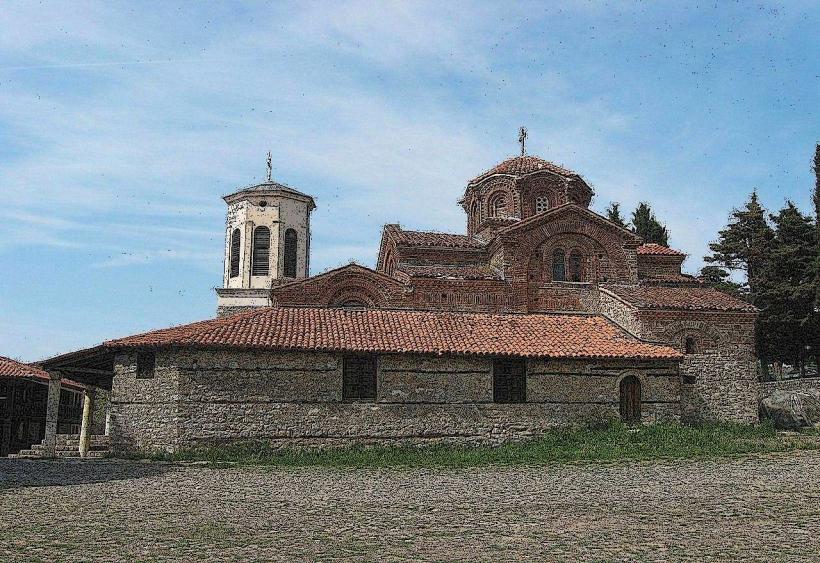
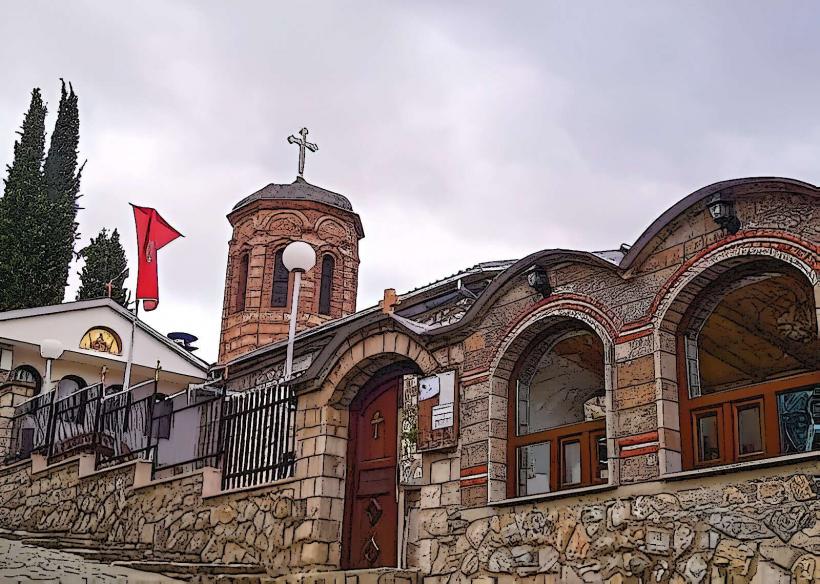
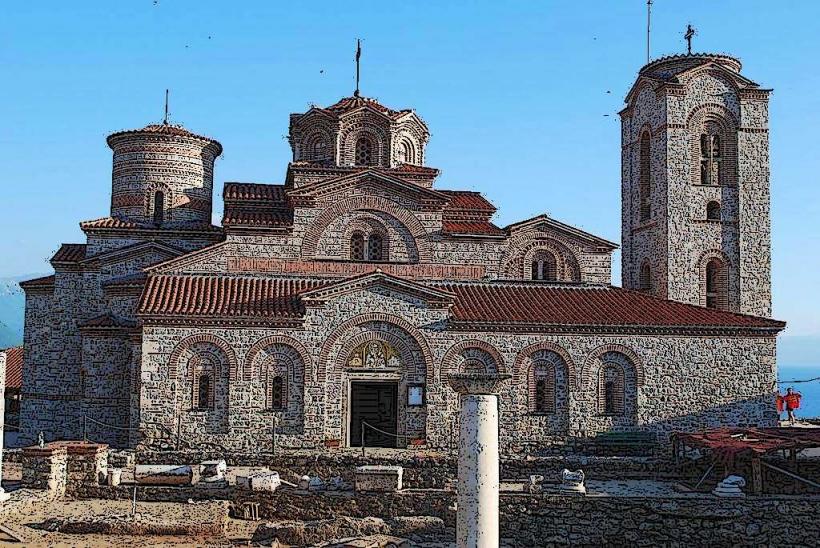
The Church of Holy Mother of God Peribleptos is a medieval Byzantine church located within the Old Town of Ohrid, North Macedonia. It functions as an active Orthodox church and a significant cultural monument.
Visual Characteristics
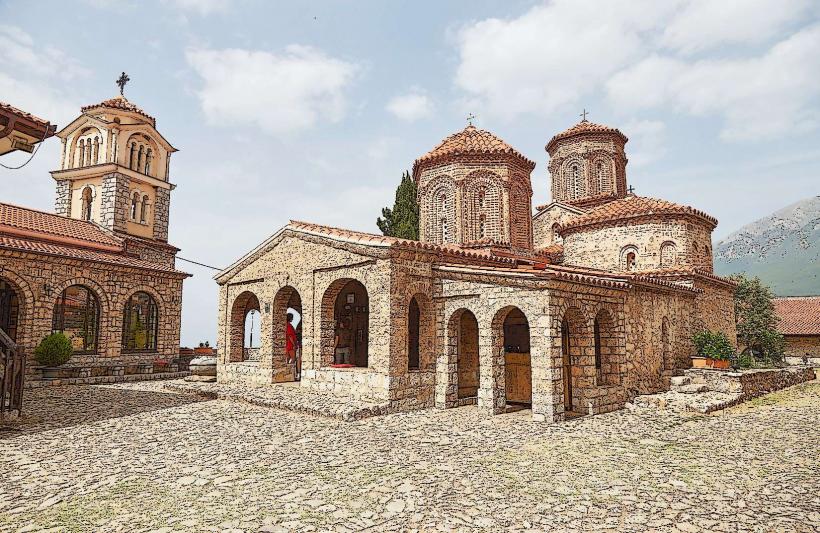
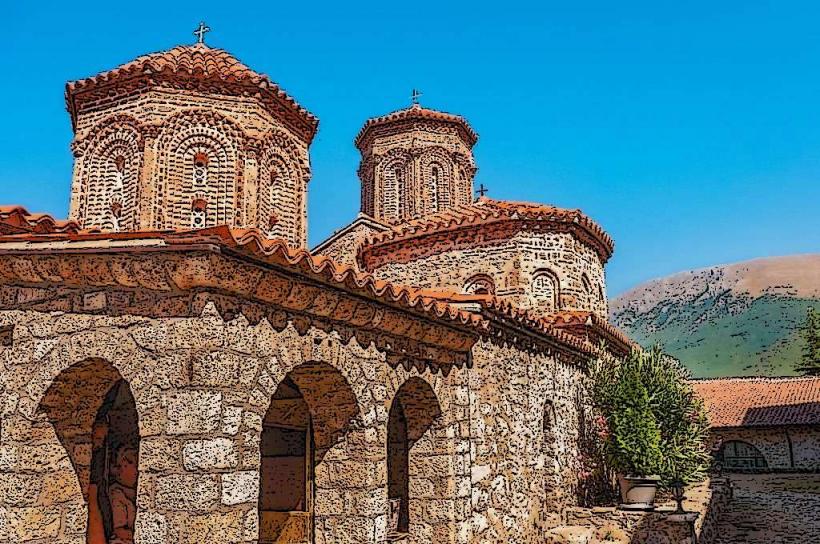
The church exhibits a cross-in-square plan, constructed primarily from brick and stone in alternating courses, characteristic of Byzantine architecture. It features a central dome supported by four columns, with smaller domes over the corner chapels. The exterior walls are adorned with decorative brickwork, including blind arches and sawtooth cornices. Its dimensions are approximately 14 meters in length and 10 meters in width, with a central dome reaching about 12 meters in height. The interior is entirely covered with frescoes.
Location & Access Logistics
The church is situated on a hillside within Ohrid's Old Town, approximately 0.8 km southwest of the city center. Access is primarily by foot via cobblestone streets from the lower town. Limited parking for small vehicles may be found on nearby streets like "Tsar Samuil" or "Kuzman Josifovski Pitu," but is generally scarce. Local public transport includes bus lines that stop near the lower Old Town entrance, requiring an uphill walk of 10-15 minutes.
Historical & Ecological Origin
Construction of the church commenced in 1295, commissioned by Progon Zgur, a relative of Byzantine Emperor Andronikos II Palaiologos. Its original purpose was as the katholikon (main church) of a monastery dedicated to the Virgin Mary. The renowned fresco painters Michael Astrapas and Eutyches from Thessaloniki completed the interior decorations between 1295 and 1299.
Key Highlights & Activities
Visitors can observe the extensive cycle of 13th-century Byzantine frescoes, which include detailed depictions of saints, biblical scenes, and portraits of the donors. Guided tours are often available from local guides in the vicinity, providing context to the iconography. Photography of the interior frescoes is generally restricted or requires a special permit.
Infrastructure & Amenities
Public restrooms are not available directly on-site but can be found at cafes and restaurants in the lower Old Town, approximately 5-10 minutes walk away. Limited natural shade is provided by trees in the churchyard. Cell phone signal (4G/5G) is generally reliable throughout the area. Several small souvenir shops and food vendors are located along the main pedestrian streets leading to the church.
Best Time to Visit
The church is best visited during the shoulder seasons of April-May or September-October to avoid peak summer crowds and heat. Morning hours, specifically between 9:00 AM and 11:00 AM, offer optimal natural light for viewing the exterior architecture and provide a quieter experience before tour groups arrive.
Facts & Legends
For a period, the church was known as St. Clement Panteleimon after the relics of St. Clement of Ohrid were moved here following the conversion of his original church into a mosque during Ottoman rule. The frescoes are notable for their innovative narrative style and emotional intensity, marking a departure from earlier Byzantine artistic conventions.
Nearby Landmarks
- Ancient Theatre of Ohrid: 0.3km West
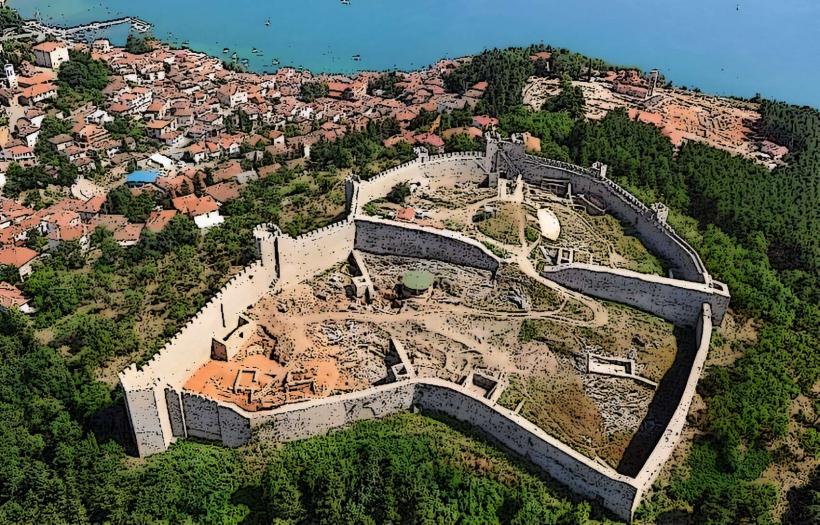
- Samuil's Fortress: 0.5km North
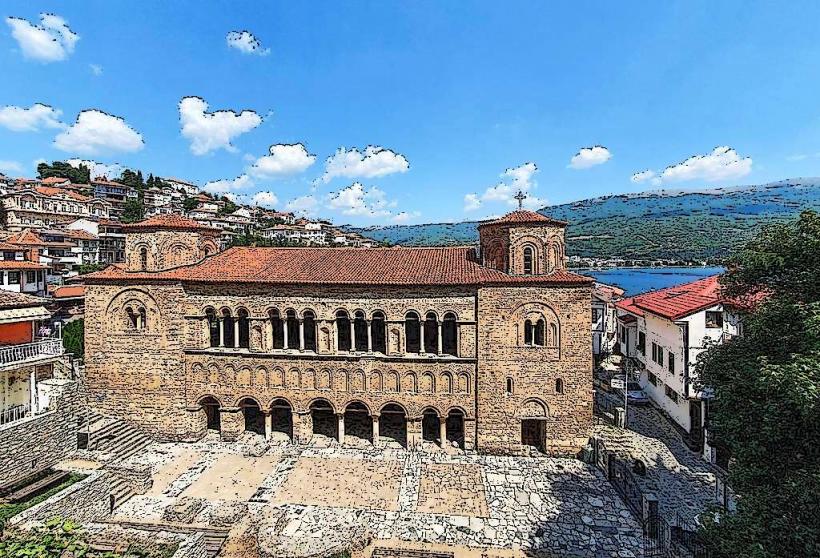
- Church of St. Sophia: 0.4km Southwest
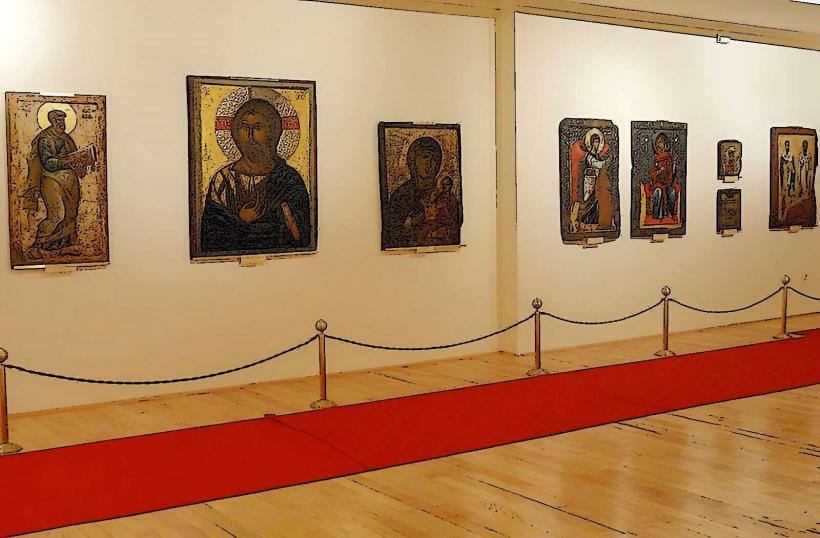
- Icon Gallery: 0.2km East
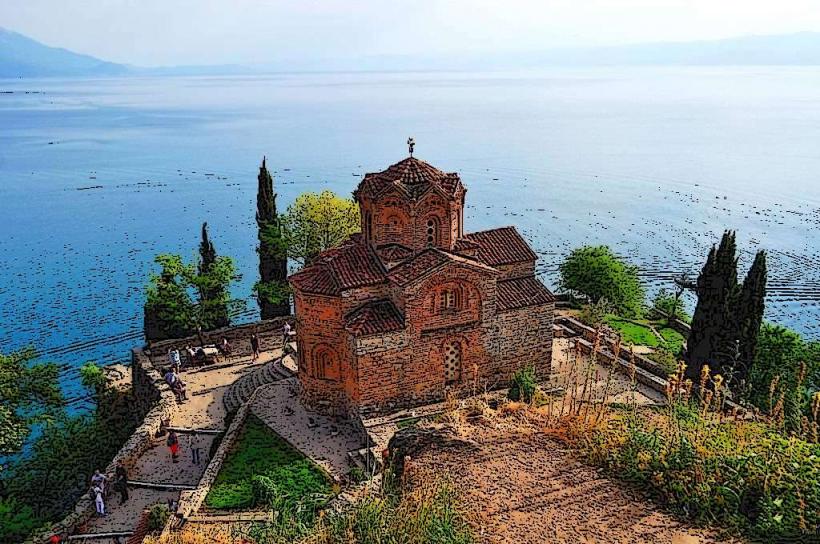
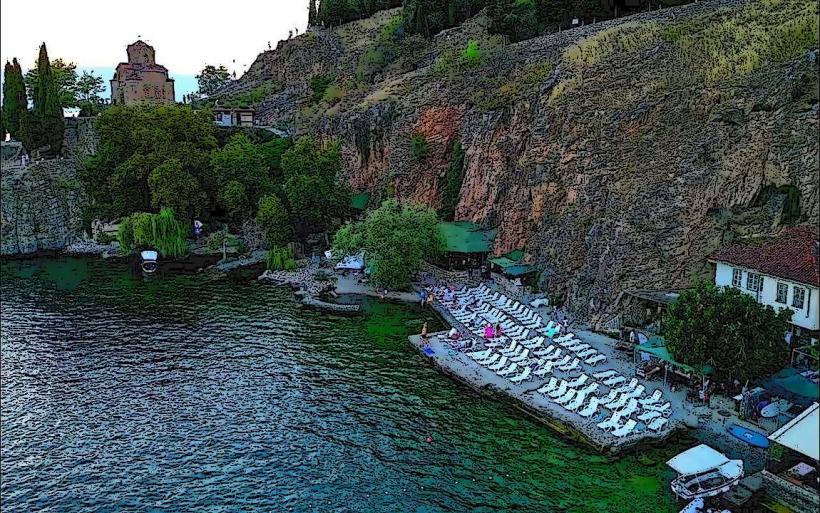
- Church of St. John at Kaneo: 0.8km Southwest